> For the complete documentation index, see [llms.txt](https://docs.makerobos.com/chatman-enterprise-whatsapp-platform/llms.txt). Markdown versions of documentation pages are available by appending `.md` to page URLs; this page is available as [Markdown](https://docs.makerobos.com/chatman-enterprise-whatsapp-platform/chatman-functions/shared-team-inbox/filter-customer-list.md).
# Filter Customer List
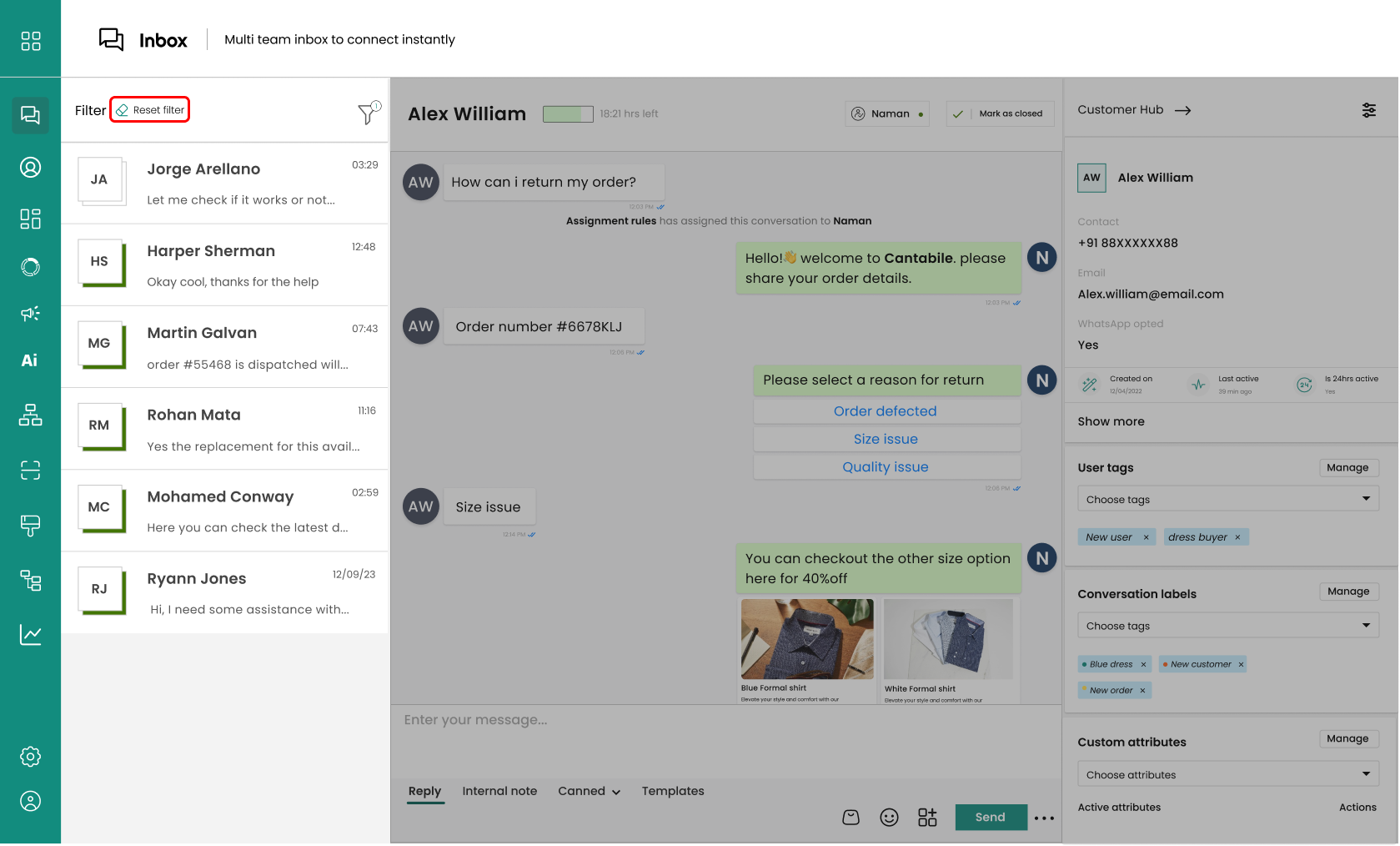
Chatman provides a **list of filters in 'Shared Team Inbox' to quickly find out the relevant customers based on various criteria.**
### **Different Filter Options**
* **Assigned to:** You can filter customers based on which agent was assigned to handle the queries.
* **User tags:** You can filter customers based on the tags you assign to them. Tags are labels that describe the user’s interests, preferences, behavior, or status.
* **Conversation status:** You can filter customers based on the status of their conversation. For example, you can filter users who have an open or closed conversation.
* **Conversation labels:** You can filter customers based on the labels you assign to their conversations. Labels are categories that describe the topic or purpose of the conversation.
* **Created on:** You can filter customers based on the date when they started the conversation.
* **Last active:** You can filter customers based on the date when they last interacted.
* **Is 24hr active?:** You can filter customers based on whether they have been active in the last 24 hours.
* **Time of user’s last message:** You can filter customers based on the time when they sent their last message.
* **User’s last message was answered?:** You can filter customers based on whether their last message was answered or not.
* **Last message read by user?:** You can filter customers based on whether they have read the last delivered message.
### Using Filter Option
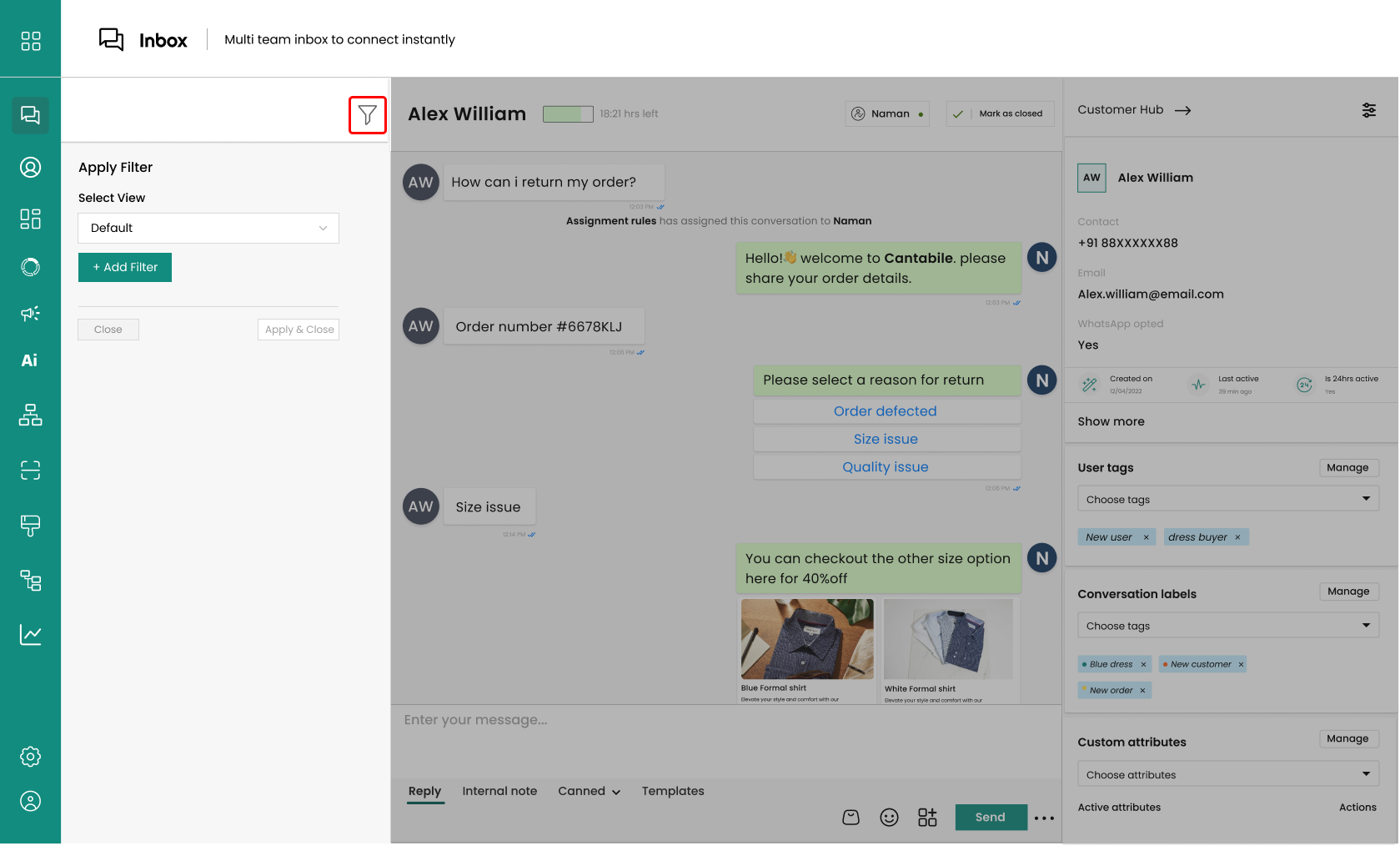
1. In the **right-hand corner** of the **Customer's Name** section**,** you can find a **Filter Icon**.
2. Click it, and you will end up at a form, as shown below.
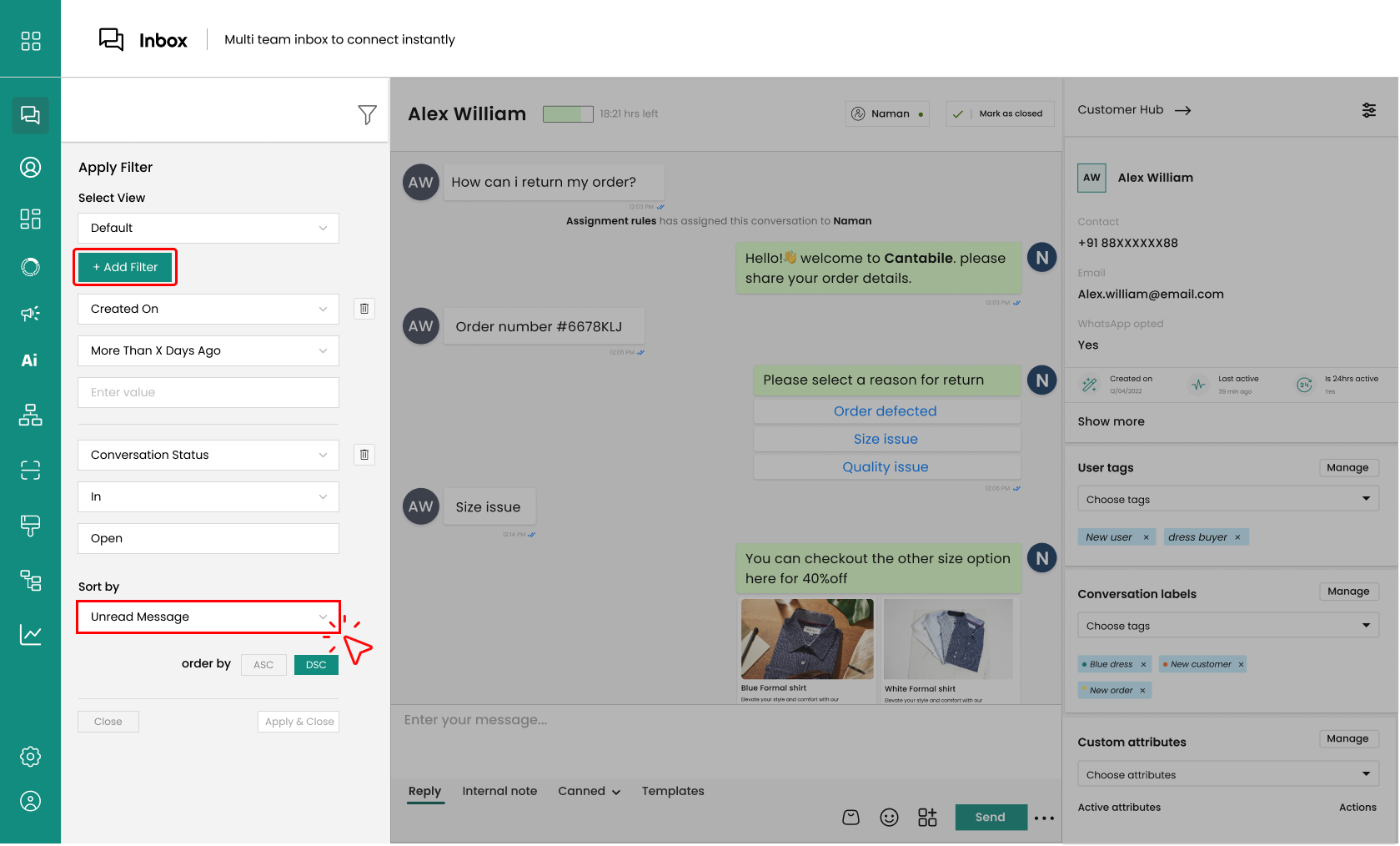
3. Tap '**Add Filter**' and **select the attribute based on which you want to narrow down your search**.
For example, if you want to **find only the customers who contacted you last week**, you can click on the filter icon, **opt for 'Created on’, select ‘Less than X days ago,’ and finally enter the value as 7**.
Different Filters
* **Assigned to:** You can filter customers based on which agent was assigned to handle the queries.
* **User tags:** You can filter customers based on the tags you assign to them. Tags are labels that describe the user’s interests, preferences, behavior, or status.
* **Conversation status:** You can filter customers based on the status of their conversation. For example, you can filter users who have an open or closed conversation.
* **Conversation labels:** You can filter customers based on the labels you assign to their conversations. Labels are categories that describe the topic or purpose of the conversation.
* **Created on:** You can filter customers based on the date when they started the conversation.
* **Last active:** You can filter customers based on the date when they last interacted.
* **Is 24hr active?:** You can filter customers based on whether they have been active in the last 24 hours.
* **Time of user’s last message:** You can filter customers based on the time when they sent their last message.
* **User’s last message was answered?:** You can filter customers based on whether their last message was answered or not.
* **Last message read by user?:** You can filter customers based on whether they have read the last delivered message.
insert
4. You can also **combine multiple filters** by simply tapping '**Add Filter**' to refine your search.
Let's say you only want the customers whose 'conversation status' is 'open' from all the customers who contacted you last week.
5. Now, under '**Sort By**', choose '**unread message**' or '**conversation updated**.'
{% hint style="info" %}
**Unread messages**: View customers **whose messages are yet to be seen**.
**Conversation Updated**: View customers whose messages are updated, which means the **agent or bot has responded to the query at last**.
{% endhint %}
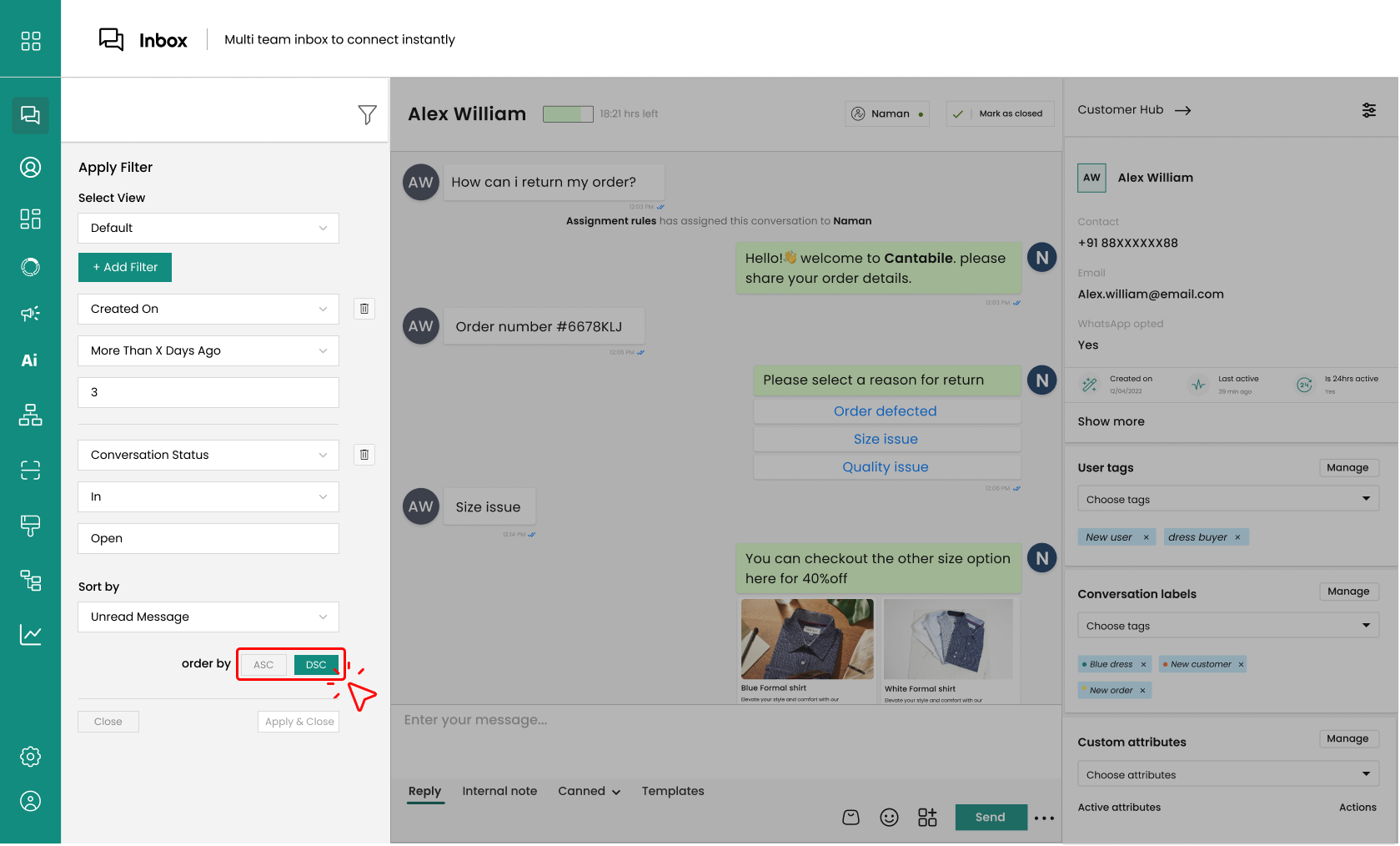
6. Now choose '**ASC**' or '**DSC**' from **order by**.
If you want the chats with the **most unread messages to be shown first, opt 'DSC'** or else **for** **chats with the least unread messages on top, opt 'ASC.'**
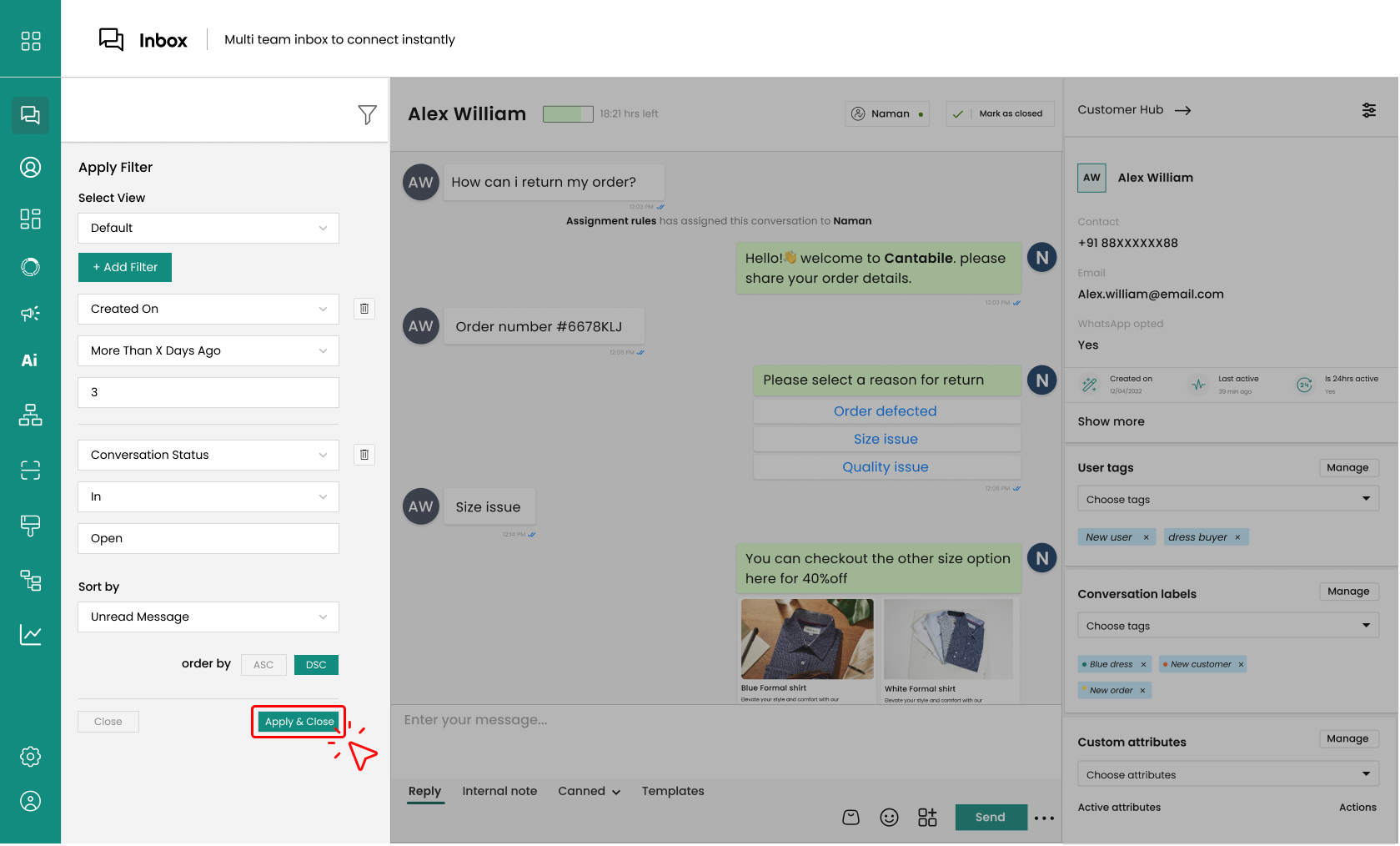
7. Tap '**Apply & Close**' to filter. You'll see the list of customers that match your preferences.
8. If you want to **reset** the filter, tap '**reset filter**' to opt out.
You get two types of views in the '**Filter**' option, the above-explained one was '**Default View**'. The other type of view is listed below:
## Types of 'View' In Filter
### **Default View**
You can add the filter to your default view.
{% content-ref url="/pages/oa1fQ79aYfW2uA43WS0W" %}
[Default View](/chatman-enterprise-whatsapp-platform/chatman-functions/shared-team-inbox/filter-customer-list/default-view.md)
{% endcontent-ref %}
### **Create View**
You can add the filter and create your own view, just for quick access for future use for the same filter.
{% content-ref url="/pages/AS2ajvg6yqb2t70OCIeo" %}
[Create View](/chatman-enterprise-whatsapp-platform/chatman-functions/shared-team-inbox/filter-customer-list/create-view.md)
{% endcontent-ref %}
##